Monday, December 19, 2011

We Are More the Same than Different


“Those who contemplate the beauty of the earth
find reserves of strength that will endure as long as life lasts.
There is something infinitely healing in the
repeated refrains of nature— the assurance

that dawn comes after night, and spring after winter."
-- Rachel Carson

"Time is Too slow for those who wait,
Too swift for those who fear,
Too long for those who grieve,
Too short for those who rejoice.
But for those who love, time is not."

-- Henry Van Dyke

"There is an appointed time for everything. And there is a time for every event under heaven -A time to give birth, and a time to die;A time to plant and a time to uproot what is planted.”
-- Ecclesiastes, 3:1-2.
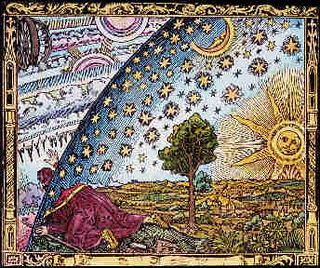
While politicians, hate groups, and religious zealots try to convince the world that cultural differences irreparably separate us from one another and, in fact, are grounds for war, the Earth has quietly, as it has done for billions of years, passed into a Solstice. This important time, when the night is the longest in the Northern Hemisphere and the day is the longest in the Southern Hemisphere, has been recognized and celebrated by every culture on Earth since the dawn of time.

On Wednesday, December 21, 2011 at 9:30 pm PST, the Winter Solstice will occur. At this time, the Sun will be the farthest from the celestial equator, the imaginary projection of the Earth’s equator on the heavens above, and the northern hemispere will experience the longest night of the year.

This has been a powerful time throughout the ages. Known as Yule in the pagan cultures of old Europe, the Winter Solstice has been a time of contemplation and celebration for religions and cultures of the world.

Because the Earth is tilted on its axis in space, this is the time when the Sun is the farthest south in the sky that it gets during the year in the North. The day is very short, and the beginning of Winter is upon us. In an age not so long passed, when we were intimately aware of our connections to this planet and our dependence upon the Sun for light and life, this time of year was recognized for its power.

How many of you in the Northern Hemisphere have noticed that since the Summer Solstice on June 21, the Sun has, each day, risen a little farther to the south of east and has remained in the sky a few minutes less? The days have been getting shorter and shorter until on Yule, the Winter Solstice, we experience the shortest day of the year.Recognition of this time of year can be a powerful healing and unifying tool for us. Imagine how the ancient peoples of the Earth felt as they observed that the Sun, the orb that gives us heat and light, kept getting lower and lower in the sky and the days kept getting shorter and shorter.

The fear must have arisen that the night would get longer and longer and that the Sun would eventually disappear completely. What could they do but surrender to this fear and prepare themselves for the Winter. They gathered food, they made their families as safe and warm as they possibly could, and reflected on the bounty of the past harvest and the joys that might be taken away.

These people must have felt that they were receiving the incredible gift of life when the Sun began journeying higher and higher and the days got longer and longer as Winter faded. Eventually, this time of year became a part of the Wheel of the Year, the earthly representation of the cycle of life, a time to slow down, reflect, appreciate the bounty of the harvest, and to appreciate the need for death - the darkness - as well as life.

While the dominant holiday offered by the media appears to be the Christian celebration of Christmas, this season is not just defined by the birth of Jesus. There are a wide variety of faiths and cultures who celebrate also around this time of year. In fact, the day for the birth of Christ was chosen to be around this time of year because of the pagan and Roman celebrations of rebirth. Some historical records indicate that Jesus' birth may have occurred in the year 4 or 6 B.C., but the exact date is unknown. Although historians cannot provide the date, they are certain it was not during the winter solstice. This is a powerful time of year to reflect on the assumptions that pervade and define our lives.

Jews celebrate Chanukah at this time of year. While it is not a major holiday in the Jewish tradition, this eight day festival commemorates the recapture of the sacred Temple in Jerusalem in 165 B.C. by a small band of warriors led by Judah the Maccabee. The temple had been taken by Syrian Greeks who were using it for their own rituals. Inside the temple, a flame was supposed to eternally burn, but the Syrians had desecrated the temple and used all but a one-day supply of oil for the flame by the time it was recaptured. By some miracle, the flame burned for eight days on that oil, until a new supply could be found. The eight-candle menorah symbolizes those eight days, the triumph of light over darkness - which is what the winter solstice is all about.

The holiest period in the Islamic year occurs around this time. It honors the lunar month in which the Qur’an was revealed by God to humanity. According to the Muslim Students Association (MSA) at the University of Southern California, the Qur'an ("Qor-Ann") is a message from Allah to humanity. According to the MSA, the Qur’an “was transmitted to us in a chain starting from the Almighty Himself to the angel Gabriel to the Prophet Muhammad. This message was given to the Prophet in pieces over a period spanning approximately 23 years (610 CE to 622 CE). The Prophet was 40 years old when the Qur'an began to be revealed to him, and he was 63 when the revelation was completed. The language of the original message was Arabic, but it has been translated into many other languages.” God decreed that this Book would be the last Book.

Ramadan is the “host month for the inauguration of the final revelation” of the Qur’an. While not tied directly to the solstice, it is interesting that this holiest of months occurs around the time of year when the balance of darkness and light are examined on Earth because of our journey around the Sun.

Celtic Tree of Life (c) 2008 Kevin Dyer (http://www.castpaper.com/)
The ancient Celts worshiped evergreen trees as symbols of the universe. The trees were considered sacred because they did not die from year to year as other (deciduous) trees did. Their lush greenery was a symbol for the hope that the Sun would return to green the Earth once again. They decorated the trees with all the images of the things they hoped the coming year would bring. It is believed that trees and wreaths have been part of this season’s celebrations for at least 4, 000 years.

The stories of many Native American tribes contain a number of references to solstice celebrations.

Buddhists celebrate Bodhi Day this time of year, a time honoring the day in 596 BCE, when the Buddha achieved enlightenment, escaping the endless cycle of birth, death and rebirth through reincarnation.

These themes, observed in many religions during this time of year, all relate to the balance of light and darkness in our lives. It may be no coincidence that these holy days from religions that, on the surface, seem so different, all occur around the time of the solstice.

Feasting was part of the many solstice celebrations, but only after a time of fasting and prayer. In the gluttonous celebrations so popular today, we seemed to have forgotten the fasting and praying.

The celebrations many of us get wrapped up in have little to do with honoring the Earth or our culture. Rather, the holidays present a huge challenge to the environment, our pocketbooks, and our health. The city of Raleigh, North Carlolina reported at their website that, "In the U.S. annual trash from gift-wrap and shopping bags totals 4 million tons. More than 38,000 miles of ribbon is thrown out each year. That is enough to tie a bow around the Earth and have 7,000 miles of ribbon leftover for streamers."


They go on to report that "Americans send 1.9 billion Christmas cards. The amount of cards sold during the holiday season would fill a football field 10 stories high and requires the harvesting of nearly 300,000 trees."

It feels so hard to decide what is right and what is wrong, what is death and what is life, and whether or not to worry about global warming or deforestation. I think it feels so difficult because for generations, we have been taught not to feel, taught instead to feel apart from the cycles of the Earth. Maybe it's not so hard after all. Maybe it's as simple as noticing the shortest day and night of the year - and knowing that the day will get longer and the darkness will recede.

Following the seasonal cycles, the rhythms of the Earth, and the web of life can be powerful medicine. Whatever culture you are from and whatever religion you practice, reflect upon its relationship to the Earth and celebrate the common themes we all share.

Happy holidays.

RESOURCES


1. Get tips on how to simplify the holiday season from the Center for a New American Dream at: http://www.newdream.org/

2. Familiarize yourself with the Wheel of the Year and see the intimate connections that all faiths and cultures have a: http://www.wheeloftheyear.com/

3. Get help changing your dietary habits from EarthSave: http://www.earthsave.org/

4. Check out Food Not Bombs at: http://home.earthlink.net/~foodnotbombs/ and learn how to feed the hungry in your community.

5. Visit the Muslim Students Association (MSA) of the University of Southern California at: http://www.usc.edu/dept/MSA/

6. Find out who your elected representatives are and e-mail them. Tell them that wanting peace is not being unpatriotic. You can find them at http://www.visi.com/juan/congress/ziptoit.html

7. Dig deep into the things you think you know or the things you want to know more about. Type the ideas that interest you into an Internet search engine and see where it leads you.

Wednesday, November 24, 2010

GIve Thanks - But Acknowledge The Truth . . .

"The Europeans were able to conquer America not
because of their military genius, or their religious
motivation, or their ambition, or their greed. They
conquered it by waging unpremeditated biological
warfare."
-- Howard Simpson

"Considering that virtually none of the standard fare
surrounding Thanksgiving contains an ounce of
authenticity, historical accuracy, or cross-cultural
perception, why is it so apparently ingrained? Is it
necessary to the American psyche to perpetually
exploit and debase its victims in order to justify
its history?"
-- Michael Dorris

"European explorers and invaders discovered an
inhabited land. Had it been pristine wilderness then, it
would possibly be so still, for neither the technology nor
the social organization of Europe in the 16th and 17th
centuries had the capacity to maintain, of its own
resources, outpost colonies thousands of miles from
home."
-- Francis Jennings

What Thanksgiving story are you telling your children or talking about with your guests during this holiday? Most Americans speak of remembering the Pilgrims who, in 1620, chose the land around Plymouth Harbor, Massachusetts for their settlement. You might remember from your elementary school days that since they arrived in the winter, they were unprepared for the harsh climate. Fortunately, they were aided by some friendly Indians who gave them food and showed them how to grow corn. When the warm weather came, the colonists planted crops, fished, hunted and became much better prepared for next winter. And when they harvested their first crop, they invited their Indian friends to celebrate with them what was to become the first Thanksgiving.

This story is taught today in thousands of classrooms across the nation, and around the world, and is ingrained in most people’s consciousness. Just yesterday, I heard some elementary school teachers telling the story on National Pubic Radio. Unfortunately, the entire story, from start to finish, is a complete lie.

You are going to have to push aside your turkey (or tofu) leftovers if you are going to learn what really happened at the time of the first Thanksgiving in America. In fact, you may not be able to stomach any food for a while after you learn the truth.

The story actually begins after 1492 as Europeans came in significant numbers to the newly found Americas.

When people began moving, the microbes that they evolved with moved along with them. Before the arrival of Europeans, the inhabitants of North and South America were remarkably healthy. But along with the Europeans came their illnesses and their livestock and the native inhabitants were now exposed to the many diseases that can be passed back and forth between those animals and humans - anthrax, tuberculosis, cholera, streptococcus, ringworm and various poxes.

The British and French had fished in Southern New England for some time before the Pilgrims landed in 1620. It is likely that they came in contact with the Indians at that time. The native inhabitants had no resistance to the diseases brought by the Europeans and within three years, a plague wiped out between 90 and 96 percent of the inhabitants of coastal New England! This death rate was unknown in all previous human experience. For comparison, the Black Plague in the 1300s killed about 30 percent of Europe’s population.

This piece of history is usually omitted from most textbooks, yet these plagues, which ravaged the Indian population for the next 15 years, set the tone for the relationship of the European settlers with the indigenous people of America.

The English settlers inferred from the plague that God was on their side in taking over the land. John Winthrop, governor of the Massachusetts Bay Colony in 1634, wrote that the plague was "miraculous." He said "God hath thereby cleared out title to this place..." Is it any wonder that our political leaders of today ask for God’s blessing and protection as they go to war to kill?

Between 1520 and 1918, there were 93 epidemics among Native Americans.

The affect that these plagues had on the native populations reached into their psyches as well. They felt that God had abandoned them. Some survivors of the Cherokee lost all confidence in their gods and priests and destroyed the sacred objects of the tribe. Indian healers could do nothing and their religion provided no cause. But the Whites usually survived and their religion seemed to save them. Many Indians turned to alcohol, Christianity or simply committed suicide. So it was a psychologically and physically devastated people that for the first 50 years of European occupation presented no real opposition to the invaders.


Pilgrims as they are shown in America today (Graphic courtesy Valerie)
Prior to the arrival of European invaders, the native population of North and South American was 100 million in 1492. The entire population of Europe at the time was 70 million. If colonists had not been able to take over lands that the Indians had already cleared and cultivated, and if the Indian population had not been devastated by disease, there might not have been any colonization at all.

By 1880, the Indian population was 250,000, a drop of 98 percent.

It is quite likely that the Pilgrims knew well of these plagues. In fact, pretty much everyone knew about them. Ziner, in the book “Squanto,” wrote that before the Mayflower sailed, King James of England gave thanks to “Almighty God in his great goodness and bounty towards us” for sending “this wonderful plague among the savages.”

Few Americans know that the Pilgrims numbered only about 35 of the 102 settlers aboard the Mayflower, which was headed for the new Virginia colony. It is believed by some historians that it is possible that the Pilgrims bribed the Mayflower captain to drop them off in Massachusetts. Some say they may have even hijacked the ship. In any case, the non-Pilgrim majority, who had joined the ship because of the economic opportunity afforded by the Virginia tobacco plantations, were quite upset at being taken someplace else.

Historians, in their search for a story that told the mythical beginnings of American culture, probably chose to omit facts about the Pilgrims story rather than tell the tale of Virginia. In Virginia, the British took the Native Americans prisoner and forced them to show the colonists how to farm. James W. Loewen, in his revealing book “Lies My Teacher Told Me,” says, “in 1623, the British indulged in the first use of chemical warfare in the colonies when negotiating a treaty with the tribes near the Potomac River, headed by Chiskiack. The British offered a toast ‘symbolizing eternal friendship,’ whereupon the chief, his family, advisors, and two hundred followers dropped dead of poison.”

The Pilgrims choose their site at Plymouth because it had beautifully cleared fields, recently planted corn, and excellent water supplies. The Pilgrims did not start from scratch in the wildness, but used a common practice of the European invaders of appropriating Indian cornfields for their initial settlements. This is why so many of the names of East Coast towns end in “field.”

The Indians who created and lived in this new Plymouth were mostly dead from the plagues, so they provided little opposition.

The Pilgrims robbed graves, stole what they could find in abandoned Indian homes, and filled their larder with the harvest of a dying culture’s labors.

The reasons for the lies about the origins of Thanksgiving go deep into culture, psyche, and religion and is covered in depth in Loewen’s book. But one thing is for sure: the true history of Thanksgiving reveals some very embarrassing facts, to say the least.

The most remarkable part of the story may be that the Pilgrims did not even introduce the tradition of Thanksgiving in America. It wasn’t until 1863 that President Lincoln proclaimed it a national holiday. The fabricated story of the Pilgrims was not even included in the holiday until the 1890’s. The term “Pilgrim” was not even used until the 1870’s.

This environmental and social devastation wrought by the European invaders of North America continues today. Oil company explorers, miners and loggers continue to introduce disease to the isolated cultures of Brazil and Venezuela, where one fourth of their population was killed in 1991.

The myth of Thanksgiving has created a false sense of self in Americans that has done great damage throughout the world. It has resulted in children being planted with the seeds of racial hatred and white superiority. It is an insult to us all, especially since most Americans are ignorant of the truth, even though the facts about the grave robbing, Indian enslavement and murder, and the plagues, were common knowledge among the settlers of New England.

Loewen gives us excellent reasons why we should seek out the truth of American history. If the conflicts of the true story were revealed, he says, then “students might discover that the knowledge they gain has implications for their lives today. Correctly taught, the issues of the era of the first Thanksgiving could help Americans grow more thoughtful and more tolerant, rather than more ethnocentric.”

We can redefine Thanksgiving for ourselves and our family. We can make it a day when we not only give thanks for the bounty we have received, but a day when we acknowledge the injustices that have been and are being perpetrated on so many people and animals in the world. After feasting, we could choose a way for our families to help lessen the suffering of some creature somewhere in the world, animal or human.

We must remember these tragedies as we shape the new millennium. With genetically engineered bacteria, crops and animals being created every day, are we risking a biological devastation like the Indians experienced?

We must examine how we are using this stolen gift of a nation. As life support systems crumble and species become extinct every day, can we really say we have learned anything in the last 500 years?

Happy Thanksgiving.

RESOURCES

1.Read "Lies My Teacher Told Me," by James W. Loewen to learn about moresurprises in American history. Buy a few copies and give them toelementary school teachers in your community. If you have children,make sure your child’s teacher has one. Visit a website devoted to thisbook at:

2.Read the Indian Country Newspaper at: http://indiancountry.com/

3.Read about the Indigenous Peoples Earth Science Project at http://www.purdue.edu/eas/iesp/project_description.shtml

4.Visit http://www.nativeamerican.net/and http://nativeamericannetroots.net/

5.Read about the largest forced relocation in the U.S. since theinternment of Japanese American citizens in World War II at http://www.diatribune.com/video-mccain-amp-forced-relocation-navajo-update.